
LEARN
YOU CAN LEARN TO THINK ENTREPRENEURIALLY.
Entrepreneurship is not a personality type. It is a trainable skill.
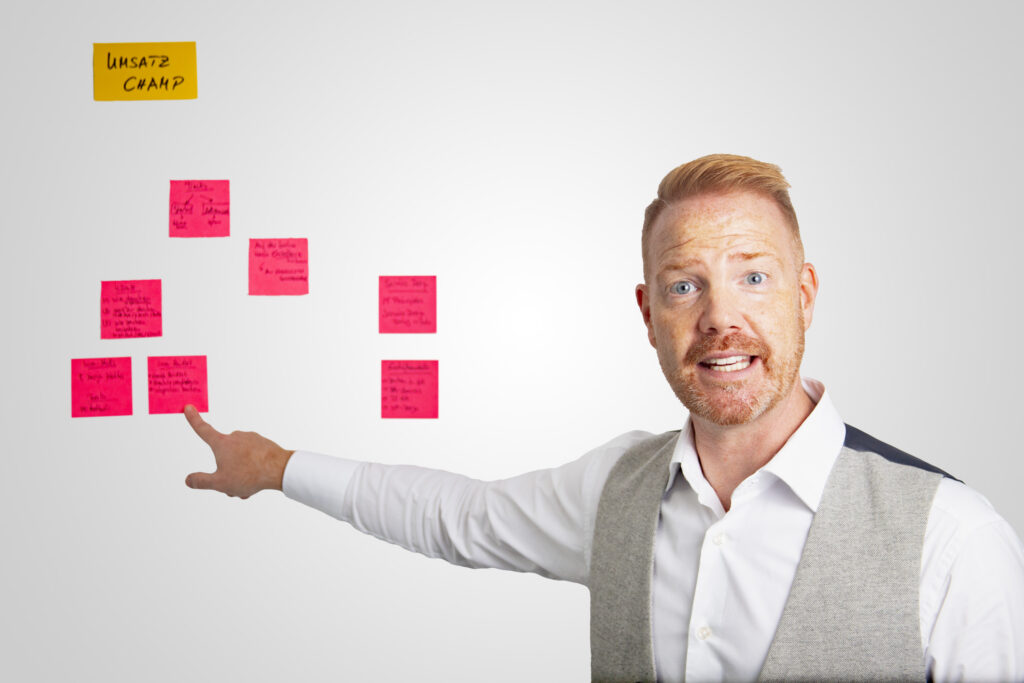
I show you how to spot opportunities, make decisions and turn ideas into something new, even under uncertainty.
You don't need to know more about everything. You need the ability to see what matters right now, make good decisions and derive the next step from what you learn.
That is exactly what you can train.
FIVE SKILLS. FOR EVERY KIND OF NEW.
Entrepreneurial action does not begin with founding a company. It begins where you want to make something new possible and don't yet know how it will work.
01 · RECOGNIZE
What is the opportunity here, really?
Spot opportunities, problems and assumptions.
02 · DECIDE
What do I need to decide now?
Act even though not all the information is available yet.
03 · EXPERIMENT
Which assumption do I need to test?
Find out what works through small steps.
04 · DEVELOP
What needs to come out of this?
Turn an idea into a value proposition and a business model.
05 · LEAD
How do I bring others on board?
Win others over for change.
22 DECISIONS FROM WHICH SOMETHING NEW EMERGES.
An idea does not become a business because you write a perfect business plan.
You have to make a series of decisions and keep learning along the way. Every step follows the same logic, including the question of how AI can support you.
INPUT
What do you need to know?
↓
ACTION
What can you do with it?
↓
RESULT
What did you find out?
↓
NEXT DECISION → AI
What do you do with it now? And where does AI help?
YOUR LEARNING PATH
You can start wherever you are right now.
FREE
YouTube & Community
Ideas, mental models and concrete tools for thinking and acting entrepreneurially. Plus the EntrepreneurSHIFT Community: one idea, one question, one next decision.
LEARN ON YOUR OWN
22 Decisions: from idea to your own business
A practical learning path for people who want to build something of their own from their expertise.
More courses and learning formats to follow.
IMPLEMENT TOGETHER
Workshops, sprints and programs
For people and organizations who don't just talk about innovation but want to move it forward.
FAQ
QUESTIONS AND ANSWERS.
YOU DON'T HAVE TO KNOW EVERYTHING.
YOU HAVE TO KNOW WHAT TO FIND OUT NEXT.
That is entrepreneurial thinking. And that is exactly what you can learn.